


08 November 2024: Clinical Research
Plaque Removal and Gingival Bleeding Using Biodegradable Toothbrushes: , Bamboo, and Nylon: A Comparative Study
Hytham N. Fageeh1AEG*, Manawar A. Mansoor2BCDEG, Hammam I. Fageeh1AEFG, Hina N. Abdul2BCDFG, Lujain Kh. Mawkili34BCDFG, Shreefah M. Faris 34BCDG, Bashayr M. Zubayni34BCDG, Zainab A. Alfardan34BCDFG, Meshal Saleh Zaidan34BCDG, Shankargouda Patil5DEFG, Ashok Kumar Bhati 1EFG
DOI: 10.12659/MSM.944469
Med Sci Monit 2024; 30:e944469


Abstract
BACKGROUND: There is little information available comparing eco-friendly products versus traditional plastic-based oral care implements. Therefore, this study was conducted to compare the plaque removal efficacy and bacterial contamination of biodegradable miswak (S. persica) toothbrushes with bamboo toothbrushes and conventional toothbrushes.
MATERIAL AND METHODS: This single-blinded, parallel randomized, observational comparative study comprised 30 participants aged 18-35 years. Participants were randomized into 3 groups of 10 participants each: miswak (S. persica) brush, bamboo brush, and regular toothbrush). Participants were trained on proper brushing technique. Plaque and bleeding scores were measured by Loe and Sillness and Ainamo and Bay indices, respectively, at baseline (T0), at 4 weeks (T1), and 8 weeks (T2). Microbial contamination on the bristles of all 3 brushes was also evaluated. Multigroup comparison was done using one-way ANOVA, whereas inter-group comparisons were made using post hoc Bonferroni correction.
RESULTS: All 3 groups had lower plaque scores at the end of 8 weeks. A statistically significant reduction in the bleeding index in the miswak group was seen from baseline to week 8, with a 16.68% reduction in bleeding sites. Similar reductions were seen in the bamboo brush (21.04%) and conventional brush (22.7%) groups. Regular toothbrushes had almost 4 times more microbial contamination than bamboo brushes and more than double the level of miswak toothbrushes. Significant difference with ANOVA test was seen among the 3 tooth brushes, with P value 0.001.
CONCLUSIONS: Miswak natural toothbrushes and bamboo toothbrushes can be as effective as a conventional plastic toothbrush.
Keywords: Dental Plaque, Dental Plaque Index, Periodontal Index, Humans, Toothbrushing, adult, Female, Male, Adolescent, young adult, Salvadoraceae, Nylons, Gingival Hemorrhage, Single-Blind Method, Bambusa, Oral Hygiene
Introduction
Plaque is the main etiological factor in initiation and progression of periodontal destruction [1]. Bacteria in the dental plaque can initiate activation of the innate immune response of the host, resulting in an inflammatory response [2]. The advancement of the inflammatory response culminates in periodontal destruction [3]. Gingivitis is recognized by redness of the gums along with swelling and bleeding of the gingival margin, while untreated periodontal disease may lead to bone loss and eventual tooth loss [4]. Effective plaque control is the cornerstone of preventing dental caries and periodontal diseases [5]. Mechanical cleansing procedures such as brushing and flossing can reliably reduce plaque and prevent gingivitis. Procedures for controlling supragingival plaque are as old as recorded history. Toothbrushing is the prevailing method of supragingival plaque elimination [6].
Forerunners of the toothbrush as we know it today were not introduced widely until the 1930s. Created from nylon and plastic, byproducts from the petrochemical industry, toothbrushes are easily manufactured, making them affordable and widely available. This made the manual toothbrush the chief implement in maintaining oral hygiene in the Western world [7]. The toothbrush continues to be one of the most universally recommended healthcare devices. However, their use has grave environmental impacts [8]. Toothbrushes do not last forever. The American Dental Association recommends replacing a toothbrush every 1–3 months [9]. Discarded brushes contribute to the ocean of plastic polluting the planet and are a part of global unsustainable plastic practices [8].
People in developing countries have very limited access to oral health care as compared to developed countries [10]. According to the Saudi Health Information Survey, 11.5% of Saudi Arabians older than 15 years visited a dentist for routine checkups and 48.3% visited a dentist when they had dental problems [11]. Al-Jaber and Daar in 2016 in a study conducted in primary health care centers of Riyadh city found that 53% of the patients visited a dentist once in the past 12 months [12]. These factors inhibit the access of dental care to the patients. Therefore, traditional methods of oral hygiene can still linger in areas due to decreased cost, availability, simplicity, and religious factors [13,14].
Miswak is derived from the plant
Miswak has plaque inhibiting and antibacterial properties against both anaerobic and aerobic bacteria found in the oral cavity [17]. Miswak is an effective oral hygiene measure and is more effective than tooth brushing in removing the plaque from embrasures; thereby increasing interproximal oral health [15].
A shift to bamboo toothbrushes and charcoal toothpastes by consumers signals “green” brand-switching behavior [20]. Toothbrushes made of recyclable materials with replaceable heads can theoretically last forever, resulting in the lowest environmental impact [8]. Replacing individual cylindrical heads of miswak brushes can significantly cut down on waste, extending the life of the brush indefinitely.
Typically, adults can be expected to reduce their plaque scores by 50% by toothbrushing [10–21]. Miswak brushes exert their effect on plaque reduction through mechanical and pharmacological action. Antimicrobial compounds within the miswak bristles may have an inhibitory action on oral bacteria [17,22]. Bamboo is a similar material whose antimicrobial properties and biodegradability make it a viable candidate for a carbon-neutral toothbrush material [12–23].
Microbial contamination of the tooth brush is a firmly established concern [24,25].
With regular use, toothbrushes of healthy and diseased users can become contaminated with pathogens from dental plaque [26]. The design, storage environment, usage, or a combination of factors may affect contamination [27]. Repeated wetting of the toothbrush surface impacts the ability of microbes to colonize [28]. Contaminated toothbrushes can relocate viruses and bacteria by infiltrating the periodontium through microtears in the oral mucous membrane and gingiva [29]. These pathogens can have oral, local, and systemic effects [30]. There are few assessments of microbial community structure as a function of toothbrush material.
people around the world are becoming interested in use of natural products for oral hygiene [31], resulting in demand for safe, effective, and economical alternative prevention methods [31,32].
There have been few published studies comparing eco-friendly products versus traditional plastic-based oral care implements. Aziazan et al (2023) showed that miswak tooth brushes showed better results than miswak chewing sticks and natural tooth brushes [31]. Therefore, this study aimed to compare the effects on dental plaque removal and gum bleeding in 30 participants aged 18–35 years from using a miswak toothbrush, a bamboo toothbrush, and a standard nylon manual toothbrush at baseline and at 4 and 8 weeks.
Material and Methods
INFORMED CONSENT AND ETHICS CLEARANCE:
The study was carried out at the College of Dentistry, Jazan University in the Kingdom of Saudi Arabia after obtaining ethics clearance from the Standing Committee for Scientific Research Ethics at Jazan University (Ref: REC-43/06/129). The purpose of the study was explained to the participants, and written informed consent was obtained.
STUDY POPULATION:
We enrolled 30 patients (aged 18–35 years) who visited the College of Dentistry, Jazan University in Saudi Arabia. The inclusion criteria were: willingness to participate in the study, no professional prophylaxis over the previous 3 months, all patients who brushed their teeth twice a day, and absence of orthodontic banding or removable prosthesis. The exclusion criteria were: uncooperative patients; patients on immunosuppressant drugs, hormonal therapy, or steroids; patients diagnosed with diabetes, epilepsy; any previous history of dental visits; physical or mental handicaps that could compromise manual dexterity; poor compliance; and any medical conditions impeding participation in the study.
STUDY DESIGN:
This study was an 8-week observational comparative study in which 30 patients were divided randomly into 3 groups: miswak head toothbrush, bamboo toothbrush, and regular toothbrush. The modified Bass technique was adapted with a minimum 2-minute duration twice daily for tooth brushing. Participants were advised to use the standard tooth paste and not to use mouthwash during the study period. Plaque and bleeding score were measured by Loe and Sillness [33] and Ainamo and Bay indices [34], respectively, at baseline (T0) and at 4 weeks (T1) and 8 weeks (T2). Microbial contamination on the bristles of all 3 brushes was also evaluated.
RANDOMIZATION: Baseline (T0): Qualifying participants were randomly assigned to 1 of 3 groups based on an envelope containing their group number. The envelopes were prepared by a biostatistician using random computer-generated number sequences to conceal the sequence generation and allocation. The envelopes were randomly distributed to the patients by a nurse unconnected to the study who was not aware of its contents. The subjects were assigned into 3 equal groups with an allocation ratio of 1: 1: 1 (n=10). The first group used a detachable miswak head toothbrush (Toothwak, Turkey, Figure 1A) made from a wooden stick. The second group used a bamboo toothbrush (iherb, China, Figure 1B) made from a bamboo stick with plastic bristles. The third group used a regular toothbrush (Colgate classic toothbrush, China, Figure 1C) made of nylon bristles. The examiners involved in the assessment of clinical data were blinded to the allocation. To preclude accidental revelation, the subjects were instructed not to tell the examiners anything about the intervention or to ask them questions regarding it. As this observational comparative study was specifically designed to assess the efficacy of brushing alone without the effect of adjuvant cleaning tools such as floss or proxa brushes, all participants were instructed to refrain from using dental floss or any other interdental cleaning device for the duration of the study, regardless of their homecare routine.
EVALUATION OF PLAQUE INDEX AND BLEEDING INDEX:
Two principal investigators, calibrated and tested for intra-examiner and inter- examiner reliability, carried out the examination (with a kappa value of 80%) at all time points. The plaque index and gingival bleeding index of 6 teeth (16, 21, 24, 36, 41, and 44) were measured at the initial visit, which was regarded as the baseline (T0). We used the Silness and Loe Plaque index, which scores of 0 to 3. A score of 0 indicates absence of plaque in the gingival area. A score of indicates there is a film of plaque adhering to the free gingival margin and adjacent area of the tooth [33]; plaque is measured by scraping a probe across the tooth surface. A score of 2 indicates moderate accumulation of soft deposits within the gingival pocket and on the gingival margin and/or adjacent tooth surface that can be seen by the naked eye. A score of 3 indicates abundant soft matter within the gingival pocket and/or on the gingival margin and adjacent tooth surface. The gingival bleeding index was measured using Ainamo and Bay gingival index. The diagnostic criteria – bleeding or no bleeding – are assumed to be relatively easy to interpret [34].
The plaque index and gingival bleeding index of all teeth were measured for all 30 participants at the initial visit. After measurement, oral prophylaxis was conducted and all the participants were given a regular toothbrush and instructed to use the modified Bass technique twice daily for 2 minutes. The instructions comprised verbal instructions supported by practical demonstration on a plastic model. Four weeks after the initial visit (T1), the plaque index and gingival bleeding index of all participants were re-evaluated. The subjects received the allocated intervention with the different oral hygiene implements. After 4 weeks (T2), patients from all 3 groups were re-evaluated and the plaque index and gingival bleeding index scores were recorded. The scores at the 3 timepoints were compared. Figure 2 depicts the study flowchart detailing patient flow and interventions.
EVALUATION OF MICROBIAL CONTAMINATION: Used brushes from each group were randomly collected at T2 (8 weeks from the initial visit), rinsed in tap water, and transported to the laboratory in a sterile bag. The open ends of the sterile test tubes were closed using a cotton plug to prevent bacterial contamination. Mueller-Hinton agar medium was prepared in a conical flask and poured into sterile plates. Each toothbrush was decapitated using a sterilized end-cutting nipper. Two-thirds of the bristles from the used toothbrushes were cut with a sterile razor and transferred to a tube containing 1 ml of Tris-EDETA buffer using sterile forceps. The tube was vortexed for 1 min to dislodge the adherent bacteria and the resultant mixture was cultured in a plate containing Mueller-Hinton agar media. Sterilized agar plates were selected to prepare the agar media and culture microorganisms in accurate proportions of water and agar powder, according to the manufacturer’s instructions. Prepared agar media were poured into the agar plates, which were then stored in a refrigerator to cool and to prevent contamination. The spread plate technique was employed with the help of a sterile inoculating loop. One ml of each of the dilution factors was collected using a sterile pipette and placed on the agar plates. After inoculation, the agar plates were placed in an incubator to allow for the growth of the microorganisms. The plates were incubated overnight in an incubator at 37°C. The agar plates with gas pack jar were placed in the incubator for 48 h, then the colony-forming units (CFU) on each plate were calculated (Figure 3A–3C). Universal standardization of the materials, instruments, methodologies, and calibration methods used for the microbial analysis was ensured.
STATISTICAL ANALYSIS:
The collected data were analyzed using SPSS for Windows, version 20.0 (SPSS, Inc., Chicago, IL, USA). Multigroup comparison was done using one-way ANOVA to compare plaque index, bleeding index, and colony-forming units. The post hoc Bonferroni test was used for inter-group comparisons. The level of statistical significance was set at
Results
BASELINE BALANCE:
There was a good baseline balance between all 3 groups in plaque and bleeding indexes. Analysis of baseline data revealed no statistically significant differences among treatment groups at the beginning of the study. Tables 1–4 shows the change in the plaque index and bleeding index at each examination for different groups and the inter-group comparisons at each examination.
PLAQUE INDEX:
The mean plaque index was compared between miswak toothbrush, conventional toothbrush, and bamboo toothbrush using one-way ANOVA. After using the regular toothbrush for 4 weeks (T1), the mean plaque index had reduced in all groups after receiving instruction in the modified Bass brushing technique. There were no significant differences between the groups with respect to plaque.
The plaque index scores showed further improvement with the use of the specially designed toothbrushes after 4 weeks of use (T2). Although significant reductions were recorded at each visit, ANOVA demonstrated that these were not statistically significant (Table 1, Figure 4).
The mean plaque index at T0 was 1.36±0.72 for the detachable miswak toothbrush group, 1.37±0.46 for the regular toothbrush group, and 1.15±0.38 for the bamboo toothbrush group. After 4 weeks of using the regular toothbrush, the plaque index reduced to 0.84±0.52, 0.92±0.62, and 0.82±0.44 for the 3 respective groups. At T2, the plaque index further decreased to 0.66±0.46, 0.60±0.44, and 0.50±0.31 for the 3 groups, respectively. No significant differences in mean plaque index were observed between the 3 groups at each visit.
The post hoc Bonferroni test revealed no significant differences in inter-group comparison between the visits (Table 2). Miswak brushes appear to reduce plaque as efficaciously as bamboo brushes and regular toothbrushes.
BLEEDING INDEX:
The mean bleeding index was compared between miswak toothbrush, conventional toothbrush, and bamboo toothbrush using one-way ANOVA. After using the regular toothbrush for 4 weeks (T1), the mean bleeding index had reduced in all groups after receiving instruction in the modified Bass technique.
At T0, the mean bleeding index was 31.1±20.08, 31.93±12.49, and 27±12.23 for the detachable headed miswak toothbrush, regular toothbrush group, and bamboo toothbrush group, respectively. After 4 and 8 weeks, there was a significant difference in the mean bleeding index between the groups at T1 (22.85±13.60, 13.04±12.93, and 9.62±8.85), and T2 (19.42±12.08, 9.23±11.96, and 5.96±7.22), respectively (Table 3, Figure 5). Our findings indicate better performance of the bamboo toothbrush in reducing bleeding as compared to miswak and regular tooth brushes. The bleeding index significantly (T1, P=0.045 and T2, P=0.023) improved in all 3 groups from T0 to T2.
After the final examination, 8 weeks after the initial visit (T2), there were significant differences between the 3 groups regarding bleeding index. There was a statistically significant reduction in the bleeding index in the miswak group from baseline to week 8, representing a 16.68% reduction in sites that bleed (Table 3, Figure 5). The reduction in the bleeding index in the miswak group from baseline to week 4 was also significant (P<0.05). There were similar reductions in the bamboo brush group (21.04%), and in the regular brush group (22.7%).
Based on the post hoc Bonferroni test (Table 4), there were significant differences in the bleeding index after intervention between miswak tooth brush and bamboo tooth brushes at 4 weeks and 8 weeks. Bamboo brushes caused significantly less bleeding at the probed sites at all time intervals compared to the miswak and conventional brush groups. The mean bleeding index at T1 (the second visit after 4 weeks) and T3 (third visit after 4 weeks) were significantly higher with miswak toothbrushes compared to bamboo toothbrushes. There were significant differences between the groups with respect to bleeding index scores.
COLONY-FORMING UNITS:
The mean colony-forming units (CFU) was compared between miswak toothbrush, conventional toothbrush, and bamboo toothbrush using one-way ANOVA. There were significant differences in mean colony-forming units between miswak toothbrush, regular toothbrush, and bamboo toothbrush (P<0.001). Bamboo brushes showed the least amount of microbial contamination, with miswak brushes coming in a close second. Regular toothbrushes had an immense amount of microbial contamination, almost 4 times that of bamboo brushes. The mean number of colony-forming units (CFU) for miswak toothbrushes per plate was 95.75, for regular toothbrushes 244.5, and 60.75 in the bamboo toothbrush group at visit T2 (Table 5, Figure 6).
The results of this study indicate that the plaque and bleeding indices decreased compared to the baseline with the use of all 3 oral hygiene implements. All 3 brushes significantly decreased bleeding index compared to baseline (
Discussion
The current study aimed to compare the effects on dental plaque removal and gum bleeding in 30 participants aged 18–35 years from using a miswak toothbrush, a bamboo toothbrush, and a standard nylon manual toothbrush at baseline and at 4 and 8 weeks. The miswak and the bamboo toothbrushes consistently performed better than the regular plastic toothbrushes.
Plaque is the main etiological factor in periodontal disease, and mechanical tooth cleaning is the most common way of controlling plaque accumulation. We compared the 3 brushes for removal of plaque, health of the gingiva, and percentage of microbial contamination.
We examined the plaque reduction efficacy and bleeding indices of patients to evaluate the efficacy of 3 types of toothbrushes. Our results indicate that all the 3 groups had plaque reduction. Our finding broadly corroborates previous studies in this area superior plaque reduction using miswak brushes. Our findings are consistent with the work of Shetty et al, who examined an Indian population and reported that subjects using miswak brushes were able to maintain oral hygiene as effectively as regular toothbrush and miswak chewstick users [35].
This accords with earlier observations of Bergström et al [36], Al-Otaibi et al [37], and Fatemeh Ezoddini-Ardakani et al [38], who investigated the use of miswak brushes versus regular toothbrushes and reported similar plaque reduction efficacy. The mechanical effect of the miswak fibers may have had an effect on plaque reduction. Al-Otaibi et al stated that increased duration of use may play a part in the relative superiority of miswak over conventional brushes [37]. Traces of fluoride present in miswak may have contributed to its therapeutic effect [39].
In our study, improvements in gingival health were observed in all subjects after the first 4 weeks. After 8 weeks, the bleeding scores were lowest in the participants using bamboo brushes, who had significantly less bleeding at the probed sites at all time intervals compared to the miswak and conventional brush groups.
Our findings reflect those of Patel et al [40], who reported an improvement in gingival health after the use of miswak brushes. Our results corroborate the results of Al-Otaibi et al [37],who reported a positive effect on gingival indices and gingivitis.
Azizan et al (2023) also showed that miswak tooth brushes were as effective in reducing plaque levels and gingival inflammation as miswak chewing sticks and standard toothbrushes in a 3-week study [31]. All the study groups showed significant improvements (
Therapeutic components of miswak may have an effect on gingival health and bleeding index [41]. Tannins within the miswak brush may have an astringent effect on the gingiva, reducing gingivitis [42], and alkaloids in miswak may exert a bactericidal effect [22,43].
We used plaque and gingival bleeding scores as outcomes of interest in this study. The technique of brushing can have an effect on these parameters. Therefore, the patients were given thorough demonstrations of the modified Bass method to ensure correct toothbrushing. Bleeding indices are proxies for assessing gingival health. It is difficult to estimate a threshold for clinically important reductions. All 3 brushes reduced gingival bleeding scores. However, their clinical importance remains unclear in the short term. Arbitrary thresholds may not support the superiority of one product over another.
Toothbrushes can become contaminated and help in the retention and survival of infectious organisms, which poses a threat to oral health. We examined the microbial contamination of all 3 types of brushes after 4 weeks of use. There were significant differences between the 3 tested toothbrushes in terms of microbial contamination. Bamboo brushes showed the least amount of microbial contamination, with miswak brushes coming in a close second. Conventional toothbrushes had an immense amount of microbial contamination, almost 4 times that of bamboo brushes. Our findings align with evidence from clinical observations of Darout and Homeida, who reported greater microbial contamination in conventional toothbrushes compared to miswak chewsticks [44].
Microbial contamination may be a function of toothbrush design [45]. Different cluster patterns of bristles and shapes of the toothbrush handle itself may affect the amount of microbial contamination [46]. Plastic may provide a favorable surface for adhesion [47]. Other factors that could have influenced microbial contamination include the oral health of the user, dental plaque composition, storage environment, or a combination of these factors [29]. In a vulnerable population, such as immunocompromised or hospitalized patients, pathogenic contamination can increase the risk of morbidity. Future studies should examine how specific design features in a brush may contribute to its propensity for harboring microorganisms independent of other factors.
In summary, the magnitude of plaque reduction benefit seen with miswak (
Incorporating sustainability into the assessment of oral health interventions may delineate their true impact. The urgency and necessity of the current research is underlined by the environmental impacts of plastic toothbrushes [48]. Discarded plastic toothbrushes can have impacts on land use and reduced biodiversity due to buildup of plastic waste. Their effects on climate change may be 11 times greater than traditional bamboo brushes or chew sticks [8]. Our findings can be used to inform individual consumer choices, oral health recommendations, and manufacturing industries. The findings of this paper may justify future research opportunities for recyclable biodegradable toothbrushes. The development and expansion of replaceable miswak (
Conclusions
Based on the present study and within its limits, miswak natural toothbrushes and bamboo tooth brushes are as effective as conventional plastic toothbrushes. Consumers concerned with planetary wellness may prefer to choose sustainable dental hygiene products.
Figures
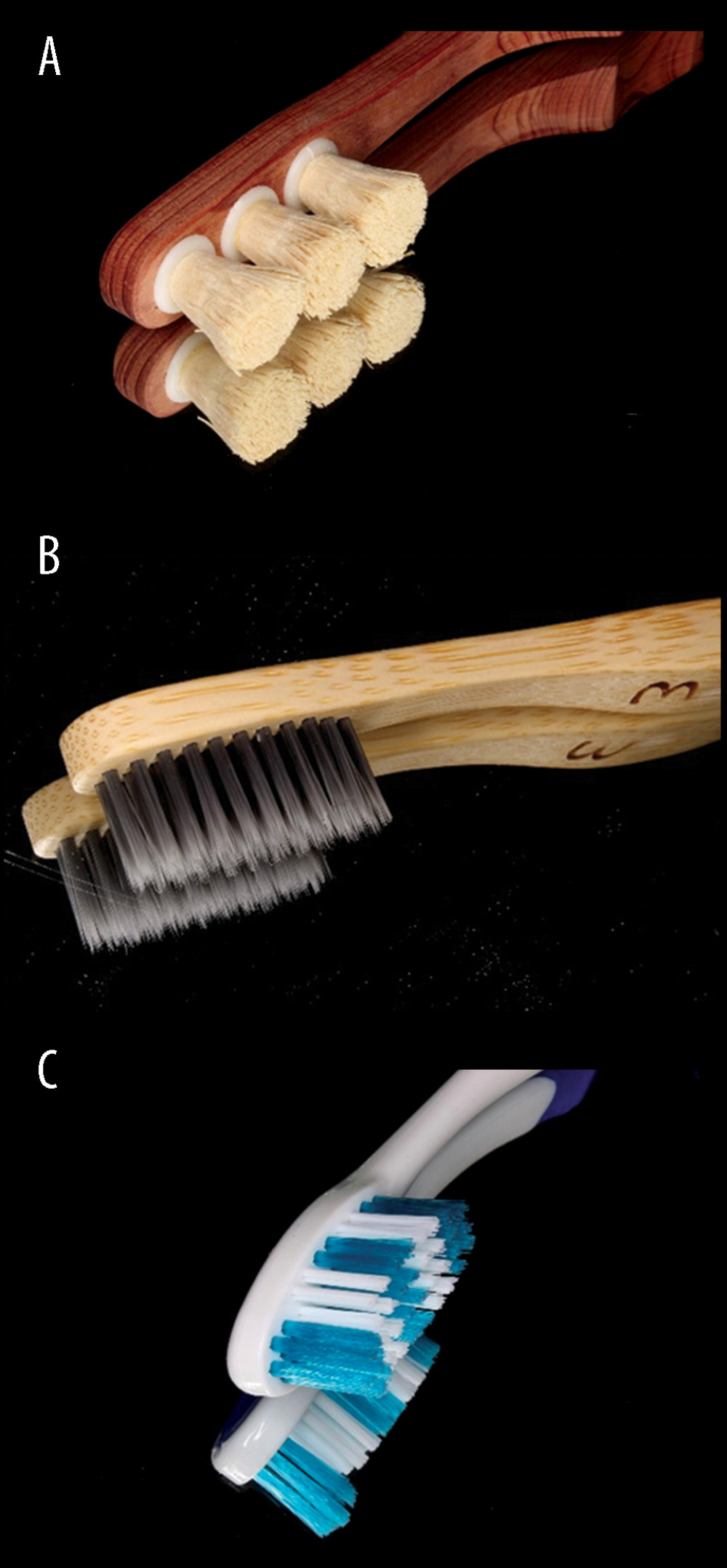 Figure 1. (A) Detachable miswak (S. persica) head toothbrush (Toothwak, Turkey). (B) Bamboo toothbrush (iherb, China). (C) Conventional toothbrush (Colgate classic toothbrush). (Photograph taken by Nikon D5300 DSLR Camera CMOS 24.2 MP Full HD 1920 X 1080p/30fps with 18–55 mm Zoom – AFP DX Nikkor Lens, Japan).
  Figure 2. Study flowchart.
  Figure 3. (A). Total number of the bacterial colony-forming units (CFU) from the detachable miswak (S. persica) head toothbrush. (B) Total number of the bacterial colony-forming units (CFU) from the bamboo toothbrush. (C) Total number of the bacterial colony-forming units (CFU) from conventional tooth brush. (Photograph taken by Nikon D5300 DSLR Camera CMOS 24.2 MP Full HD 1920 X 1080p/30fps with 18–55 mm Zoom – AFP DX Nikkor Lens, Japan).
  Figure 4. Plaque index at time T0, T1, and T2 for detachable miswak (S. persica) toothbrushes, bamboo toothbrushes, and conventional tooth brushes.
  Figure 5. Bleeding index at time T0, T1, and T2 for detachable miswak (S. persica) toothbrushes, bamboo toothbrushes, and conventional tooth brushes.
  Figure 6. Mean colony-forming units (CFU) at T2 for detachable miswak (S. persica) toothbrushes, bamboo toothbrushes, and conventional tooth brushes.
 Tables
Table 1. Mean plaque index at different interval with different toothbrushes using one-way ANOVA. Table 2. Inter-group comparison of plaque index using post hoc Bonferroni test.
 Table 3. Mean bleeding index at different intervals with different toothbrushes using one-way-ANOVA.
 Table 4. Inter-group comparison of Bleeding Index using post hoc Bonferroni test.
 Table 5. Colony-forming unit with different toothbrushes using one-way ANOVA.
References
1. Abdulkareem AA, Al-Taweel FB, Al-Sharqi AJB, Current concepts in the pathogenesis of periodontitis: From symbiosis to dysbiosis: J Oral Microbiol, 2023; 15(1); 2197779
2. Czerniuk MR, Surma S, Romanczyk M, Unexpected relationships: Periodontal diseases: atherosclerosis – plaque destabilization? From the teeth to a coronary event: Biology, 2022; 11; 272
3. Hajishengallis G, Immunomicrobial pathogenesis of periodontitis: Keystones, pathobionts, and host response: Trends Immunol, 2014; 35; 3-11
4. Farina R, Tomasi C, Trombelli L, The bleeding site. A multi-level analysis of associated factors: J Clin Periodontol, 2013; 40(8); 735-42
5. Loe H, Oral hygiene in the prevention of caries and periodontal disease: Int Dent J, 2000; 50(3); 129-39
6. Honkala S, Vereecken C, Niclasen B, Honkala E, Trends in to othbrushing in 20 countries/regions from 1994 to 2010: Eur J Public Health, 2015; 25(Suppl 2); 20-23
7. Albertsson KW, van Dijken JWV, Awareness of toothbrushing and dentifrice habits in regularly dental care receiving adults: Swed Dent J, 2010; 34(2); 71-78
8. Lyne A, Ashley P, Saget S, Combining evidence-based healthcare with environmental sustainability: Using the toothbrush as a model: Br Dent J, 2020; 229(5); 303-9
9. ADA Division of Communications, For the dental patient: Toothbrush care: Cleaning, storing and replacement: J Am Dent Assoc, 2006; 137(3); 415
10. Almutlaqah MA, Baseer MA, Ingle NA, Factors affecting access to oral health care among adults in Abha city, Saudi Arabia: J Int Soc Prevent Communit Dent, 2018; 8; 431-38
11. El Bcheraoui C, Tuffaha M, Daoud F, Kravitz H, Use of dental clinics and oral hygiene practices in the kingdom of Saudi Arabia, 2013: Int Dent J, 2016; 66; 99-104
12. Al-Jaber A, Daar OB, Primary health care centers, extent of challenges and demand for oral health care in Riyadh, Saudi Arabia: BMC Health Serv Res, 2016; 16; 628
13. Niazi F, Naseem M, Khurshid Z: Eur J Dent, 2016; 10(2); 301-8
14. Owens J, Sami W, The role of the Qur’an and Sunnah in oral health: J Religion Health, 2016; 55(6); 1954-67
15. Haque MM, Alsareii SA: Saudi Med J, 2015; 36(5); 530-43
16. Wu CD, Darout IA, Skaug N, Chewing sticks: Timeless natural toothbrushes for oral cleansing: J Periodontal Res, 2001; 36(5); 275-84
17. Khatak M, Khatak S, Siddqui AA: Pharmacogn Rev, 2010; 4(8); 209-14
18. Gurudath G, Vijayakumar KV, Arun R, Oral hygiene practices: Ancient historical review: J Dent Orofac Res, 2012; 2(4); 225-27
19. Azizan NF, Mohd N, Nik Azis NM, Baharin B: BMC Complement Med Ther, 2023; 23(1); 456
20. Wu HC, Wei CF, Tseng LY, Cheng CC, What drives green brand switching behavior?: Marketing Intelligence & Planning, 2018; 36(6); 694-708
21. van der Weijden GA, Hioe KPK, A systematic review of the effectiveness of self-performed mechanical plaque removal in adults with gingivitis using a manual toothbrush: J Clin Periodontol, 2005; 32(Suppl 6); 214-28
22. Alireza RG, Afsaneh R, Hosein MSS: J Oral Biol Craniofac Res, 2014; 4(1); 19-23
23. Xi L, Qin D, An X, Wang G, Resistance of natural bamboo fiber to microorganisms and factors that may affect such resistance: BioRes, 2013; 8(4); 6501-9
24. Karibasappa GN, Nagesh L, Sujatha BK, Assessment of microbial contamination of toothbrush head: An in vitro study: Indian J Dent Res, 2011; 22; 2-5
25. Caudry SD, Klitorinos A, Chan EC, Contaminated toothbrushes and their disinfection: J Can Dent Assoc, 1995; 61; 511-16
26. Blaustein RA, Michelitsch LM, Glawe Aj, Toothbrush microbiomes feature a meeting ground for human oral and environmental microbiota: Microbiome, 2021; 9(1); 32
27. Richard D, How clean is your toothbrush?: Evid Based Dent, 2012; 13(4); 111
28. Ferreira CA, Savi GD, Panatto AP, Microbiological evaluation of bristles of frequently used toothbrushes: Dental Press J Orthod, 2012; 17(4); 72-76
29. Frazell MR, Munro CL, Toothbrush contamination: A review of the literature: Nurs Res Pract, 2012; 2012; 420630
30. Glass RT, Lare MM, Toothbrush contamination: A potential health risk?: Quintessence Int, 1986; 17(1); 39-42
31. Azizan NF, Mohd N, Nik Azis NM, Baharin B: BMC Complement Med Ther, 2023; 23(1); 456
32. Halawany HS: Saudi Dent J, 2012; 24(2); 63-69
33. Loe H, Silness J, Periodontal disease in pregnancy I. Prevalence and severity: Acta Odontol Scand, 1963; 21; 533-51
34. Ainamo J, Bay I, Periodontal indexes for and in practice: Tandlaegebladet, 1976; 80(5); 149-52
35. Shetty R, Shetty S, Amirisetty R, Agrawal A, Comparative study to assess the effect of chewing stick and toothbrush on oral hygiene and periodontal status among Indian population: Int J Public Heal, 2010; 1(1); 5-10
36. Bergström J, Batwa S, Al-Otaibi B, The effectiveness of chewing stick miswak on plaque removal: Saudi Dent J, 2006; 18; 125-33
37. Al-Otaibi M, Al-Harthy M, Soder B, Comparative effect of chewing sticks and toothbrushing on plaque removal and gingival health: Oral Health Prev Dent, 2003; 1(4); 301-7
38. Fatemeh E-A, Mahmoud Nouri S, Hasan F: Health, 2012; 4; 612-18
39. Hattab FN, Meswak: The natural toothbrush: J Clin Dent, 1997; 8(5); 125-29
40. Patel PV, Shruthi S, Kumar S, Clinical effect of miswak as an adjunct to tooth brushing on gingivitis: J Indian Soc Periodontol, 2012; 16(1); 84-88
41. Dorner WG, Active substances from African and Asian natural toothbrushes: Chem Rundschau, 1981; 34; 19-23
42. Almas K, Al-Bagieh N, Akpata ES, In vitro antibacterial effect of freshly cut and 1-month-old Miswak extracts: Biomedical Letters, 1997; 56(223–224); 145-49
43. Othman L, Sleiman A, Abdel-Massih RM, Antimicrobial activity of polyphenols and alkaloids in middle eastern plants: Front Microbiol, 2019; 10; 911
44. Darout IA, Homeida HE, Survival rate of oral bacteria on toothbrush and miswak stick: American Journal of Health Research, 2016; 4(5); 134-37
45. Bunetel L, Tricot-Doleux S, Agnani G, Bonnaure-Mallet M, In vitro evaluation of the retention of three species of pathogenic microorganisms by three different types of toothbrush: Oral Microbiol Immunol, 2000; 15(5); 313-16
46. Wetzel W-E, Schaumburg C, Ansari F, Microbial contamination of toothbrushes with different principles of filament anchoring: J Am Dent Assoc, 2005; 136(6); 758-65 quiz 806
47. Glass RT, The infected toothbrush, the infected denture, and transmission of disease: A review: Compendium, 1992; 13(7); 592-98
48. Shah A, How eco-friendly are our toothbrushes?: Br Dent J, 2020; 229(5); 300-1
Figures
Figure 1. (A) Detachable miswak (S. persica) head toothbrush (Toothwak, Turkey). (B) Bamboo toothbrush (iherb, China). (C) Conventional toothbrush (Colgate classic toothbrush). (Photograph taken by Nikon D5300 DSLR Camera CMOS 24.2 MP Full HD 1920 X 1080p/30fps with 18–55 mm Zoom – AFP DX Nikkor Lens, Japan).Figure 2. Study flowchart.Figure 3. (A). Total number of the bacterial colony-forming units (CFU) from the detachable miswak (S. persica) head toothbrush. (B) Total number of the bacterial colony-forming units (CFU) from the bamboo toothbrush. (C) Total number of the bacterial colony-forming units (CFU) from conventional tooth brush. (Photograph taken by Nikon D5300 DSLR Camera CMOS 24.2 MP Full HD 1920 X 1080p/30fps with 18–55 mm Zoom – AFP DX Nikkor Lens, Japan).Figure 4. Plaque index at time T0, T1, and T2 for detachable miswak (S. persica) toothbrushes, bamboo toothbrushes, and conventional tooth brushes.Figure 5. Bleeding index at time T0, T1, and T2 for detachable miswak (S. persica) toothbrushes, bamboo toothbrushes, and conventional tooth brushes.Figure 6. Mean colony-forming units (CFU) at T2 for detachable miswak (S. persica) toothbrushes, bamboo toothbrushes, and conventional tooth brushes. Tables
Table 1. Mean plaque index at different interval with different toothbrushes using one-way ANOVA.Table 2. Inter-group comparison of plaque index using post hoc Bonferroni test.Table 3. Mean bleeding index at different intervals with different toothbrushes using one-way-ANOVA.Table 4. Inter-group comparison of Bleeding Index using post hoc Bonferroni test.Table 5. Colony-forming unit with different toothbrushes using one-way ANOVA.Table 1. Mean plaque index at different interval with different toothbrushes using one-way ANOVA.Table 2. Inter-group comparison of plaque index using post hoc Bonferroni test.Table 3. Mean bleeding index at different intervals with different toothbrushes using one-way-ANOVA.Table 4. Inter-group comparison of Bleeding Index using post hoc Bonferroni test.Table 5. Colony-forming unit with different toothbrushes using one-way ANOVA. In Press
Clinical Research
Effects of Single-Bout Endurance Exercise Intensity on Peripheral Neurotrophic Factors in Patients With Isc...Med Sci Monit In Press; DOI: 10.12659/MSM.952089
Review article
Anisodus tanguticus in Cancer Research: A Review of Traditional Use, Phytochemistry, Extraction Methods, an...Med Sci Monit In Press; DOI: 10.12659/MSM.952999
Clinical Research
Nasal Mucociliary Clearance and Its Relationship With Disease Severity in Patients With Multiple SclerosisMed Sci Monit In Press; DOI: 10.12659/MSM.952850
Clinical Research
Modified Thoracoabdominal Nerves Block Through the Perichondrial Approach vs Subcostal Transversus Abdomini...Med Sci Monit In Press; DOI: 10.12659/MSM.953976
Most Viewed Current Articles
17 Jan 2024 : Review article 14,176,570
Vaccination Guidelines for Pregnant Women: Addressing COVID-19 and the Omicron VariantDOI :10.12659/MSM.942799
Med Sci Monit 2024; 30:e942799
13 Nov 2021 : Clinical Research 3,762,188
Acceptance of COVID-19 Vaccination and Its Associated Factors Among Cancer Patients Attending the Oncology ...DOI :10.12659/MSM.932788
Med Sci Monit 2021; 27:e932788
14 Dec 2022 : Clinical Research 2,466,310
Prevalence and Variability of Allergen-Specific Immunoglobulin E in Patients with Elevated Tryptase LevelsDOI :10.12659/MSM.937990
Med Sci Monit 2022; 28:e937990
16 May 2023 : Clinical Research 708,927
Electrophysiological Testing for an Auditory Processing Disorder and Reading Performance in 54 School Stude...DOI :10.12659/MSM.940387
Med Sci Monit 2023; 29:e940387